Field Notes from Brazil — Volume 7 Lucas Albuquerque Gouveia de Lima is Bytecenture’s Brazil-based payment UX researcher. This is the seventh in a series of Field Notes from our in-market researchers across ten countries.
A subtle but structural shift is happening in how payment loyalty is built in Brazil.
The battlefield is no longer only the checkout screen. It is the default payment method attached to subscriptions the user stops thinking about.
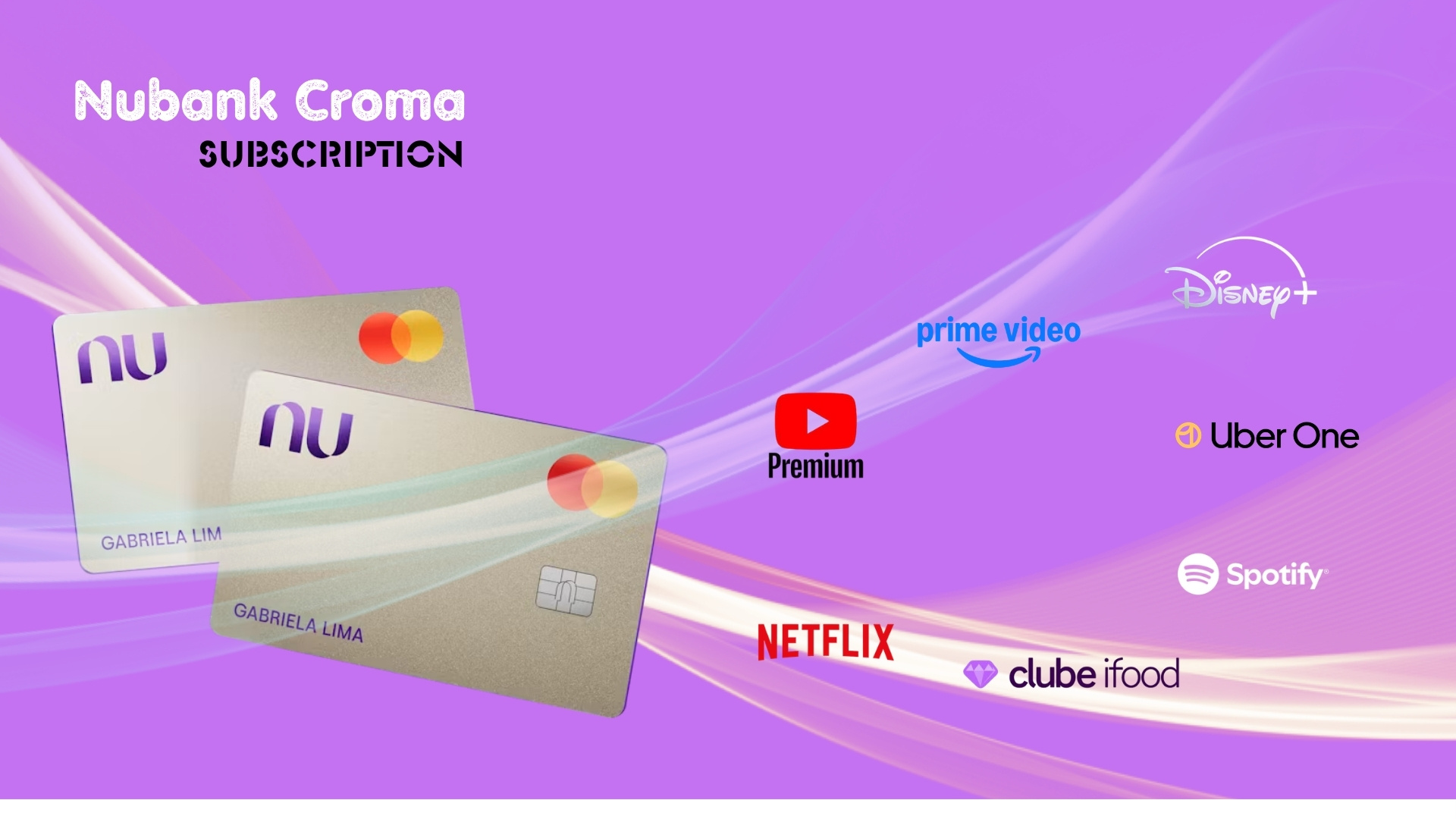
Nubank’s new Croma product is a useful signal. Positioned between the standard Nubank account and the premium Ultravioleta tier, Croma offers a Mastercard Platinum card with cashback on credit purchases and elevated cashback on selected digital subscriptions. Nubank’s own materials describe 5% cashback on subscriptions across 28 platforms, including streaming, music, mobility, delivery, shopping, and online services.
The important point is not the cashback rate by itself.
It is where the cashback is aimed.
The Default-Card Strategy
A subscription payment is different from a one-off checkout decision.
When a user registers a card for Netflix, Spotify, Uber One, Clube iFood, YouTube Premium, Disney+, Prime Video, or another recurring digital service, that card becomes part of the background infrastructure of the user’s life. The next payment does not require a checkout decision. It just happens.
That is why default-card position is so valuable.
A card that becomes the default for recurring digital subscriptions does not need to win the user’s attention every month. It only needs to win the setup moment once, then benefit from inertia.
Croma’s subscription cashback is designed around that behaviour. It gives users a reason to move recurring charges onto the Nubank card, then lets the habit compound quietly.
Why Inertia Matters
In payment UX, inertia is often stronger than preference.
A user may like another bank’s app. They may hold multiple cards. They may compare benefits at checkout. But once a card is embedded across recurring services, switching away becomes work.
The user has to remember where each subscription is billed, open each service, find the billing settings, replace the card, confirm the change, and trust that the next renewal will not fail.
That is a lot of friction for a benefit the user may only notice once a month.
This is the design of invisibility: reward the user for making one setup decision, then let the payment relationship continue without requiring active choice.
The Consolidation Effect
Croma also includes a monthly-fee waiver structure. Nubank says customers can receive exemption from the Croma monthly fee if they reach at least R$4,000 per month on the credit-card bill, or maintain R$30,000 invested or held with Nubank.
That rule matters because it encourages consolidation.
The user is not only deciding where to place subscriptions. They are being nudged to concentrate broader financial activity inside the Nubank ecosystem: card spend, recurring charges, savings, investments, mobile plan, toll tag, and partner benefits.
This is not just a card proposition. It is an account-deepening strategy.
What This Means for Competitors
For competing banks, wallets, and subscription platforms, the response is not simply to offer another reward.
The harder problem is portability.
If the default-card advantage comes from inertia, the counter-strategy has to reduce the cognitive load of switching. Subscription dashboards should not be buried deep inside settings. Users should be able to see recurring payments, understand where they are billed, and move them to a preferred payment method with minimal effort.
The winning UX will make payment-method migration feel less like account maintenance and more like benefit activation.
Do not say:
Update your payment credentials.
Say:
Move your subscriptions and unlock your benefit.
That framing matters. The user is not trying to manage billing infrastructure. They are trying to make their money work harder with less effort.
What Is Still Open
A few questions are worth watching as subscription-focused card loyalty develops in Brazil.
First, cashback may win setup, but not necessarily long-term emotional loyalty. If a competitor makes migration easier or offers a stronger bundle, users may still move.
Second, subscription cashback depends on recognition. Users need to understand which services qualify, how cashback is calculated, and whether partner coverage matches their actual subscription mix.
Third, portability will become a competitive surface. The easier it becomes to move recurring charges between cards, the weaker default-card inertia becomes.
The Bottom Line
Nubank Croma shows where card loyalty in Brazil is moving.
The payment battle is no longer only about what happens when the user reaches checkout. It is about which card becomes invisible inside the user’s recurring digital life.
The most valuable payment choice may be the one the user stops actively making.
References and Sources
- Nubank. Cartão Nubank Croma Mastercard Platinum. nubank.com.br — Source for Croma’s card positioning, 0.8% cashback on credit purchases, 5% cashback on 28 digital subscription platforms, eligible service examples, and monthly-fee exemption conditions.
- Nubank Newsroom. Nubank introduces its new segment, Nubank Croma. international.nubank.com.br — Source for the Croma launch, subscription cashback positioning, platform examples, Caixinha Turbo, NuCel, HBO Max, and broader ecosystem benefits.
- Nubank. Termos e Condições Croma. nubank.com.br — Source for Croma terms, eligibility structure, cashback mechanics, and monthly-fee waiver rules.