Field Notes from Brazil - Volume 8
Lucas Albuquerque Gouveia de Lima is Bytecenture's Brazil-based payment UX researcher. This is the eighth in a series of Field Notes from our in-market researchers across ten countries.
Retention in Brazilian e-commerce is moving from passive transaction triggers toward habit-based engagement.
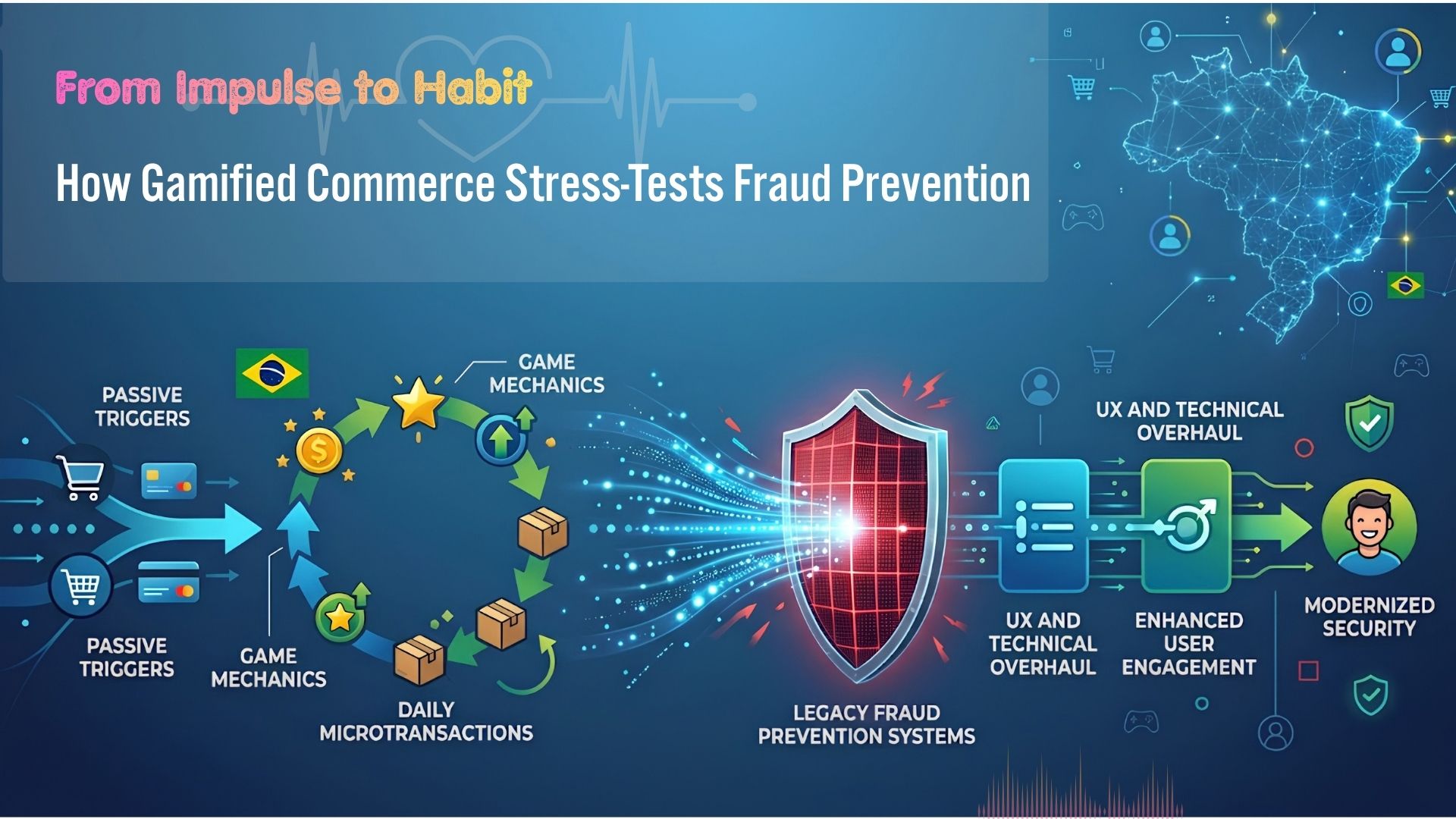
Platforms are using game-like mechanics to bring users back more frequently and generate new purchasing occasions. But as these experiences create bursts of low-value transactions, they can collide with fraud controls designed to detect unusual payment velocity.
The product challenge is to prevent security from interrupting the behaviour the platform is trying to build.
From Pull to Habit
Historically, e-commerce design followed a pull model: the user feels a need, searches for a product, and converts.
Retention design increasingly works differently. The goal is to create recurring reasons to open the app, even before the user has a specific purchase in mind.
Mercado Livre's coupon and flash-offer experiences are a useful example. Offers may be available for a limited period or until a redemption limit is reached, while app notifications help users discover new coupons. Scarcity and short availability windows encourage customers to check the platform regularly rather than waiting for their next planned purchase.
Magazine Luiza follows a similar strategy with its Black App Magalu campaigns. Some of its strongest promotions are available through the app, while users are encouraged to save favourite products and enable notifications for price changes and offers.
These mechanics do more than promote an individual discount. They create a repeatable loop: notification, app visit, offer discovery, purchase, and return.
When Engagement Looks Like Fraud
The hidden friction appears in the payment layer.
Imagine a customer making three separate R$15 purchases on the same day to complete an in-app challenge or use several short-lived offers. From the customer's perspective, the activity is intentional and connected to the product experience.
To a conventional fraud model, however, a sudden cluster of low-value transactions at the same merchant may look suspicious. High transaction velocity and small authorization amounts can also appear in card-testing attacks, where stolen card credentials are tested before larger fraudulent purchases.
The signals overlap, even though the intent is completely different.
If the risk system responds with a hard decline, it breaks the engagement loop at the moment the platform has worked hardest to create it. The customer sees a failed payment. The product team sees lost conversion. The fraud team sees a control working as designed.
All three views can be true at the same time.
The Risk Model Needs More Context
Card issuers, acquirers, and commerce platforms need a fuller picture of the transaction before treating frequency as risk.
Network tokenization can reduce exposure of the underlying card number and provide token-related context. EMV 3-D Secure can supply issuers with transaction, payment-method, browser, and device information for risk-based authentication. Platforms can also use their own account history and trusted-device signals to distinguish a recognized customer from an automated attack.
These tools do not mean velocity checks should simply be relaxed. They allow transaction velocity to be evaluated alongside stronger evidence.
Several purchases made by an established account on a recognized device present a different risk profile from rapid attempts distributed across multiple cards or newly created accounts.
The goal is not less security. It is better context.
What This Means for Product Teams
Preparing for this behaviour requires engagement, payments, and risk teams to design the journey together.
High-traffic promotional moments need graceful degradation. If a large number of users open the app when a coupon becomes available, checkout must remain reliable even when recommendation, loyalty, or game layers are under pressure.
Legitimate declines also need an immediate recovery path. A payment error should not become a dead end. The customer may be offered step-up authentication, a retry with clearer guidance, or an appropriate fallback such as Pix, a digital wallet, or an available account balance.
Product analytics should also connect the engagement event to the payment outcome. Teams need to know whether customers reached checkout through a mission, coupon, flash offer, or ordinary product search. Without that context, a false decline may look like an isolated payment failure rather than a break in a deliberately designed habit loop.
Finally, risk teams should be involved before a gamified mechanic launches. If a campaign is expected to produce unusually frequent or low-value purchases, that behaviour should be anticipated, tested, and monitored from the start.
The Bottom Line
Gamified commerce changes more than how users browse. It changes the rhythm of transactions.
When product teams design for repeated, low-value purchases, payment and fraud systems must be prepared for the same behaviour. Otherwise, the platform may build an effective engagement loop only to have its own risk controls break it at checkout.
The strongest products will not treat retention and fraud prevention as separate systems. They will design both around a shared understanding of what legitimate behaviour now looks like.
References and Sources
- Mercado Livre. Mercado Livre: como encontrar cupons, descontos e ofertas. Source for coupons, daily offers, flash promotions, and time-limited availability. mercadolivre.com.br
- Mercado Livre. Cupons todos os dias. Source for app-based coupon access, notifications, validity conditions, and redemption limits. mercadolivre.com.br
- Magazine Luiza. Black App Magalu. Source for app-exclusive promotions, favourite products, and offer notifications. magazineluiza.com.br
- EMVCo. EMV 3-D Secure. Source for transaction, payment-method, and device data used in risk-based authentication. emvco.com
- EMVCo. EMV 3-D Secure Transactions and Leveraging EMV Payment Token Data. Source for the role of token data in issuer risk decisions and authentication. emvco.com
- Adyen. What Is Payment Fraud? Prevention Strategies and Best Practices. Source for card testing, behavioural analytics, and velocity checks. adyen.com