Field Notes from Brazil - Volume 10
Lucas Albuquerque Gouveia de Lima is Bytecenture's Brazil-based payment UX researcher. This is the tenth in a series of Field Notes from our in-market researchers across ten countries.
Most e-commerce apps are built around a clear intention: find a product, compare the options, buy it, and leave.
Entertainment changes that contract.
When a retail platform bundles shipping, payments, streaming, and other subscription benefits, it is no longer competing only for the next transaction. It is creating reasons to return when the customer has no immediate purchase in mind.
That can deepen loyalty. It can also produce an app whose home screen no longer knows what it is for.
The product challenge is not how to fit more benefits into the interface. It is how to support different intentions without making the primary shopping journey harder.
From Transaction Frequency to Attention Frequency
Amazon established the familiar model in Brazil: Prime combines fast, free delivery on eligible products with Prime Video, exclusive offers, music, reading, and gaming benefits.[1]
Mercado Livre has developed the same logic into a broader ecosystem proposition. Its current Meli+ structure connects commerce benefits such as free shipping, discounts, cashback, and Mercado Pago returns with multiple entertainment tiers. Meli+ Total includes Disney+, while Meli+ Mega brings Netflix, Disney+, HBO Max, and Apple TV into one subscription.[2]
The platform also operates Mercado Play, an ad-supported streaming service with free, rental, and partner-subscription content. Mercado Libre's 2025 annual report describes Mercado Play explicitly as a tool for increasing engagement and as a video-advertising surface, not simply as a membership perk.[3, 4]
The strategic direction is clear. A marketplace normally waits for demand. Entertainment gives it a chance to participate in the customer's routine between purchases.
Mercado Libre reported that Meli+ subscribers grew 72% year over year in the second quarter of 2026, and that engagement among Meli+ users outpaced engagement among users of its wider commerce-and-fintech ecosystem across a range of company metrics.[5]
That is evidence of momentum, not proof that streaming caused it. Meli+ also includes shipping, discounts, cashback, installments, and financial benefits. Customers who choose a loyalty plan may already be more engaged than customers who do not.
The important product point is narrower: entertainment has become part of how a retail platform defines and measures the relationship.
The CX Puzzle: Power Drills and TV Series
From a Customer Experience standpoint, this convergence creates a fascinating navigational puzzle.
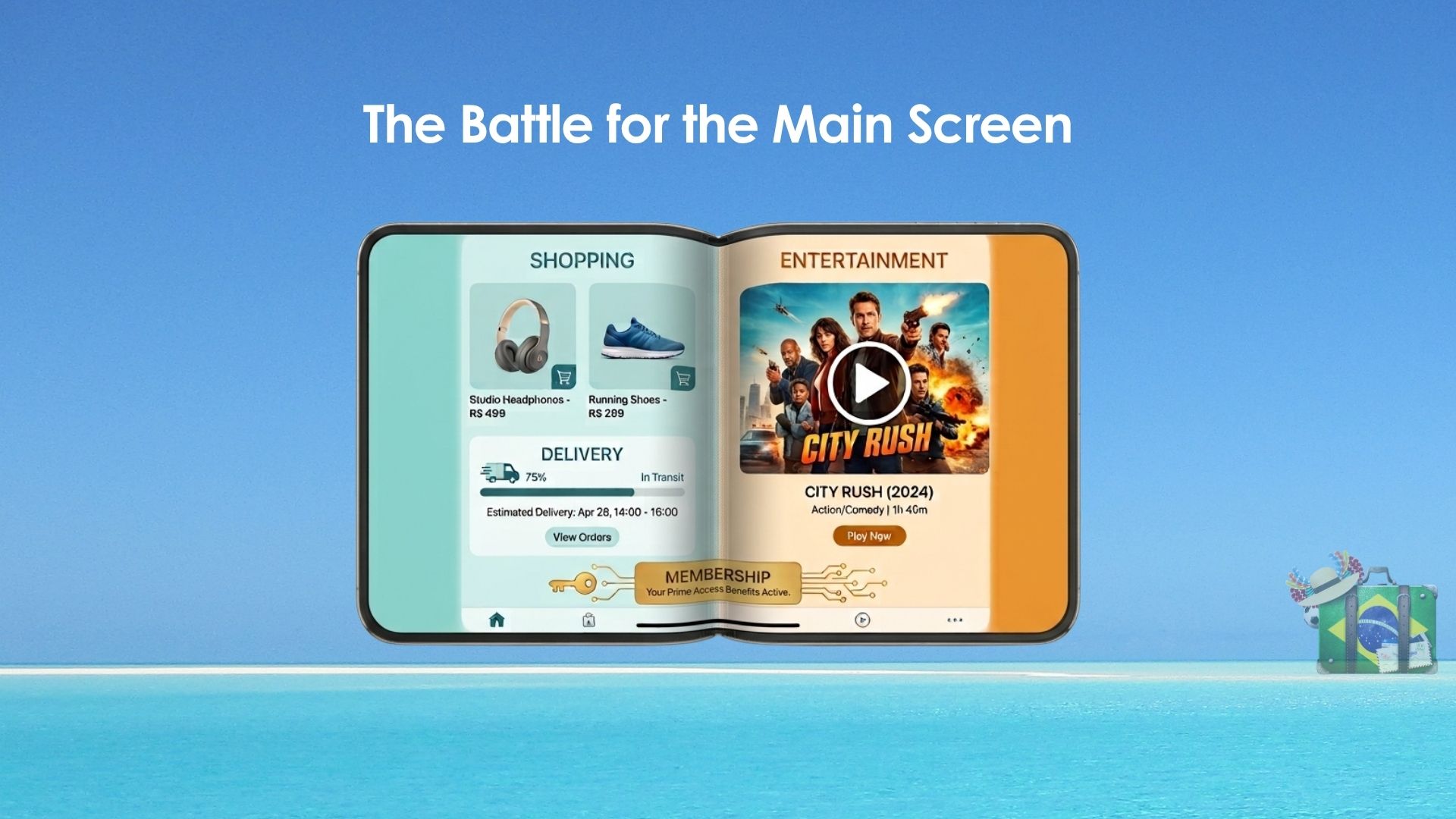
An app cannot simultaneously behave like an infinite shelf of power drills and an immersive catalogue of television series without risking decision fatigue. Shopping is usually task-led: the customer arrives with a product, price, or delivery need in mind. Entertainment is browse-led: the customer may arrive without a fixed choice and expect the interface to help create one.
When both modes compete inside the same hierarchy, the main screen loses clarity. A large streaming promotion can interrupt a high-intent shopping journey. A dense grid of product offers can make a content hub feel transactional and difficult to explore.
The challenge is contextual cross-selling: how do you sell the loyalty plan without interrupting the primary shopping journey?
The answer is not to hide the entertainment value. It is to reveal that value when it becomes relevant.
Progressive Disclosure at Checkout
The strongest pattern is progressive disclosure.
The retail home screen can remain focused on shopping. The media benefit appears at the moment the customer encounters a cost or constraint that the loyalty plan can solve. Shipping selection at checkout is the clearest example.
At that point, the comparison is concrete:
Pay R$X for this delivery, or subscribe for R$Y and receive eligible shipping benefits plus access to entertainment.
The customer is no longer being asked to evaluate an abstract subscription. They can compare the immediate shipping cost with a recurring plan that carries value beyond the order.
This is a better bridge than a permanent streaming banner on the retail home screen because the offer explains itself in context. It supports the active task instead of competing with it.
The execution still needs discipline. The interface should show the recurring price, promotional period, renewal terms, shipping conditions, included entertainment tier, and cancellation route. It should also preserve a clear path to complete the purchase without subscribing.
Progressive disclosure can continue after checkout. The order-confirmation screen can guide the customer to activate the entertainment benefit, while the account area can show activation status, linked partner accounts, and benefits that have not yet been used. Mercado Livre's current Meli+ guidance reflects the importance of this second step by explaining how existing streaming accounts, profiles, history, and prior billing relationships are handled.[2]
The bundle is not fully delivered when the membership payment succeeds. It is delivered when the customer can use the promised benefit.
How to Apply It to Your Product
Designing a complex ecosystem requires the separation of intents. Give transactional activity a clear Shop destination and content or benefits a distinct Hub or Play destination.
Where both sit inside one app, separate navigation tabs can help users switch modes without losing their place. Shopping should remain focused on finding and buying products; the entertainment destination should support discovery, viewing, and benefit activation.
Connect them through precise contextual prompts. Introduce the membership when shipping costs make its value tangible, guide subscribers to activate a streaming benefit after purchase, and surface unused benefits in the account area.
Each prompt should make the next action clear and preserve an easy return to the original task.
Measure the success of media and retail integration through both average order value (AOV) and how often customers open the app when they have no intention of buying anything.
AOV shows what customers spend when they buy. Those additional visits help UX designers assess whether entertainment is giving the platform a place in customers' everyday routines.
Track whether these visits become a habit, whether included benefits are used, and how these patterns relate to membership renewal and later purchases. Keep shopping completion and task time visible alongside them to check that added engagement supports an efficient retail experience.
References and Sources
- Amazon Brasil. Amazon Prime. Source for the current Brazilian Prime bundle, including delivery, Prime Video, exclusive offers, music, reading, and gaming benefits. amazon.com.br
- Mercado Livre Brasil. Meli+ Brasil: Assinatura, Frete Gratis e Entretenimento. Source for current Meli+ tiers, commerce and financial benefits, included streaming services, existing-account linking, and billing guidance. mercadolivre.com.br
- Mercado Livre Brasil. Mercado Play Brasil. Source for Mercado Play's current free, rental, and partner-subscription entertainment surfaces. play.mercadolivre.com.br
- MercadoLibre, Inc. 2025 Annual Report. Source for the Meli+ Mega streaming bundle and Mercado Play's role as an engagement and video-advertising platform. investor.mercadolibre.com
- MercadoLibre, Inc. Q2 2026 Letter to Shareholders. Source for company-reported Meli+ subscriber growth and comparative engagement observations. investor.mercadolibre.com